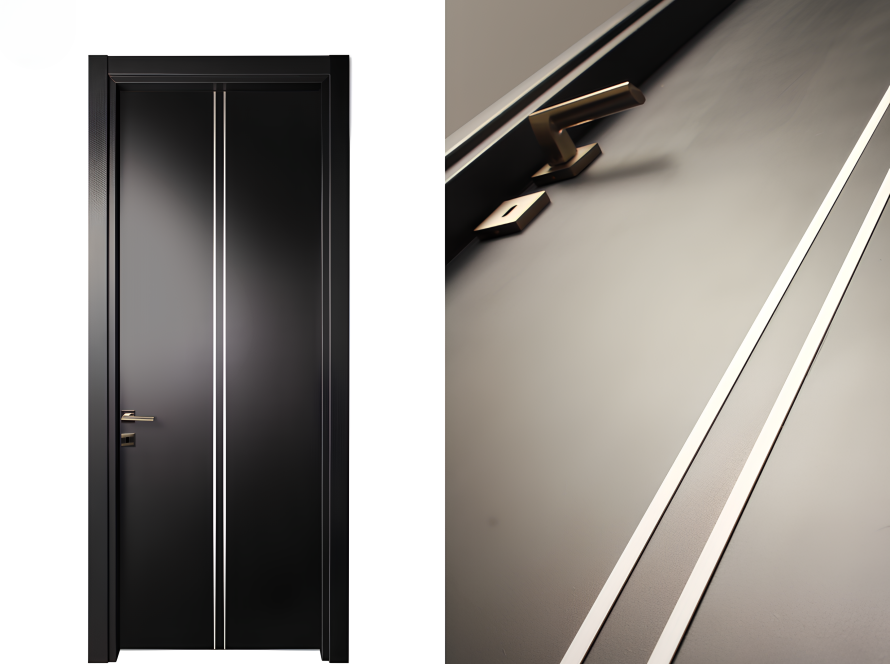
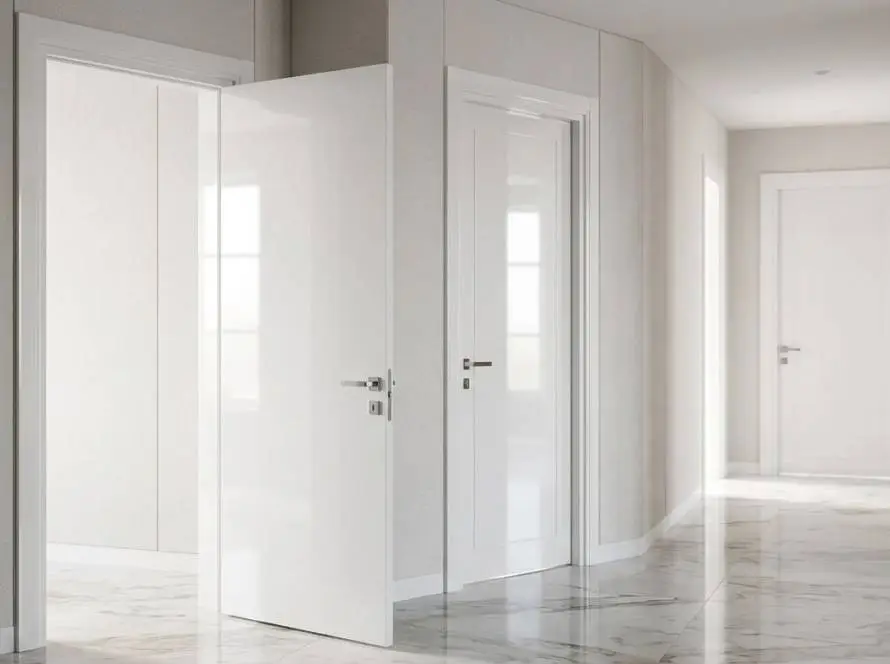
A good interior door stays flat, quiet and trouble-free years after installation — and that is no accident. It is the result of a controlled manufacturing process, measured at every stage. Below, we walk through every step a Eurasia Door set passes through, from raw timber to the shipping container, with the real production parameters behind each one. Whether you are an architect, an importer or a project supplier, this article shows you exactly where quality is built in.
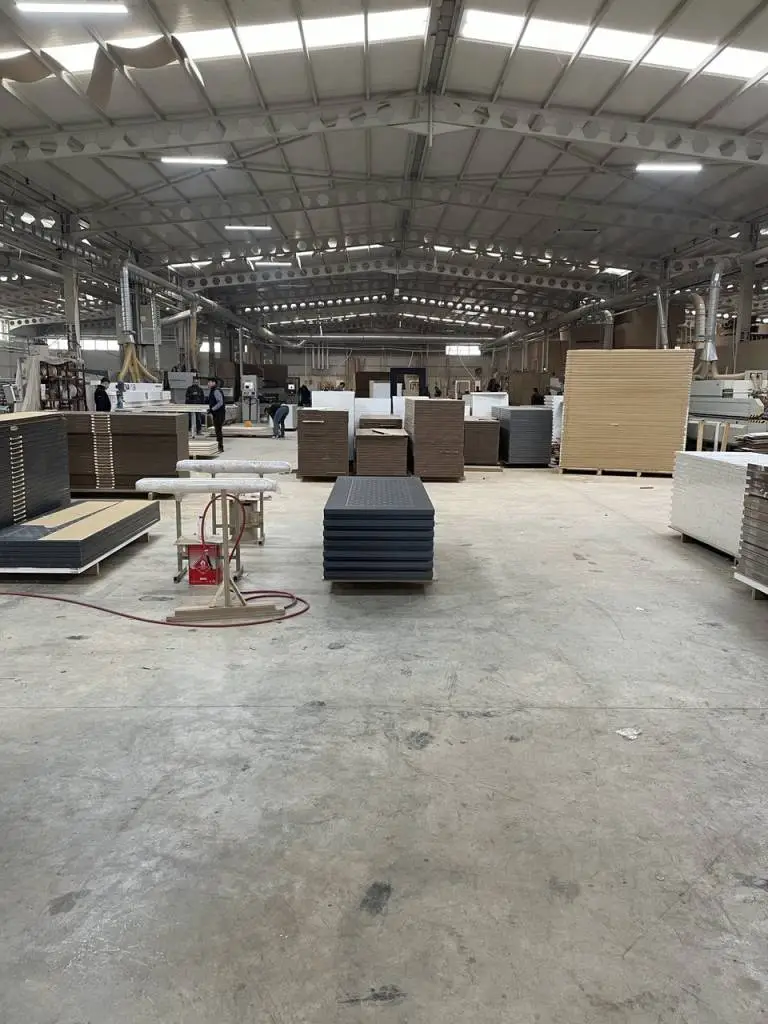
1. Stiles and Rails: The Timber Frame
Every door leaf begins with the stiles and rails — the solid timber strips that form the structural perimeter of the leaf. These are cut from plantation-grown timber and processed on a band-saw line into lumber of precise, consistent thickness.
The cut timber then enters controlled kiln-drying chambers, where its moisture content is gradually reduced to a stable 8–12% — the benchmark range for dimensional stability in architectural joinery. Drying to this level is critical: under-dried timber warps and twists after installation, a defect no surface finish can hide.
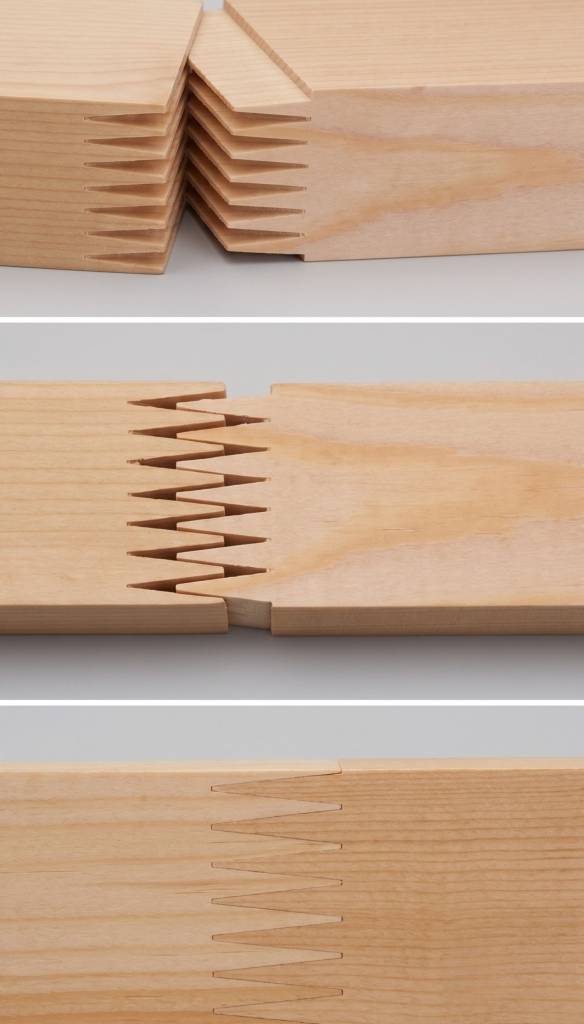
Once dried, only timber that passes selection moves forward. Each piece is cross-cut on a defect-removal saw that isolates and removes knots and weak grain. The clean sections are then finger-jointed — interlocking comb-profile teeth are machined into the ends and bonded together end-to-end. This transforms short but sound lengths into long, dimensionally stable frame members that resist bowing far better than single-length timber.
2. Frame Assembly and Core Filling
The finger-jointed stiles and rails are assembled by the production team, squared and sized to the exact order specification, to form the leaf frame. Once the body is built, the internal core is set inside the frame — and the core type is selected to suit the project:
- Paper honeycomb — lightweight and cost-efficient; ideal for high-volume residential and hospitality fit-outs
- Timber lattice — added rigidity for heavier-use interior openings
- Tubular core — balanced weight-to-strength for standard commercial doors
- EPS foam — uniform fill with improved insulation
The core choice directly governs the leaf’s weight, acoustic behaviour and structural feel — which is why it is matched to the application rather than applied as a one-size-fits-all standard.
3. Surface Application and Pressing
After the core is set, production branches according to the finish ordered: Lacquered, PVC-Coated, Melamine, Natural Veneer or American Panel doors. Each line applies its surface differently, but all share the same engineering principle — a face skin permanently bonded to the timber frame under controlled pressure.
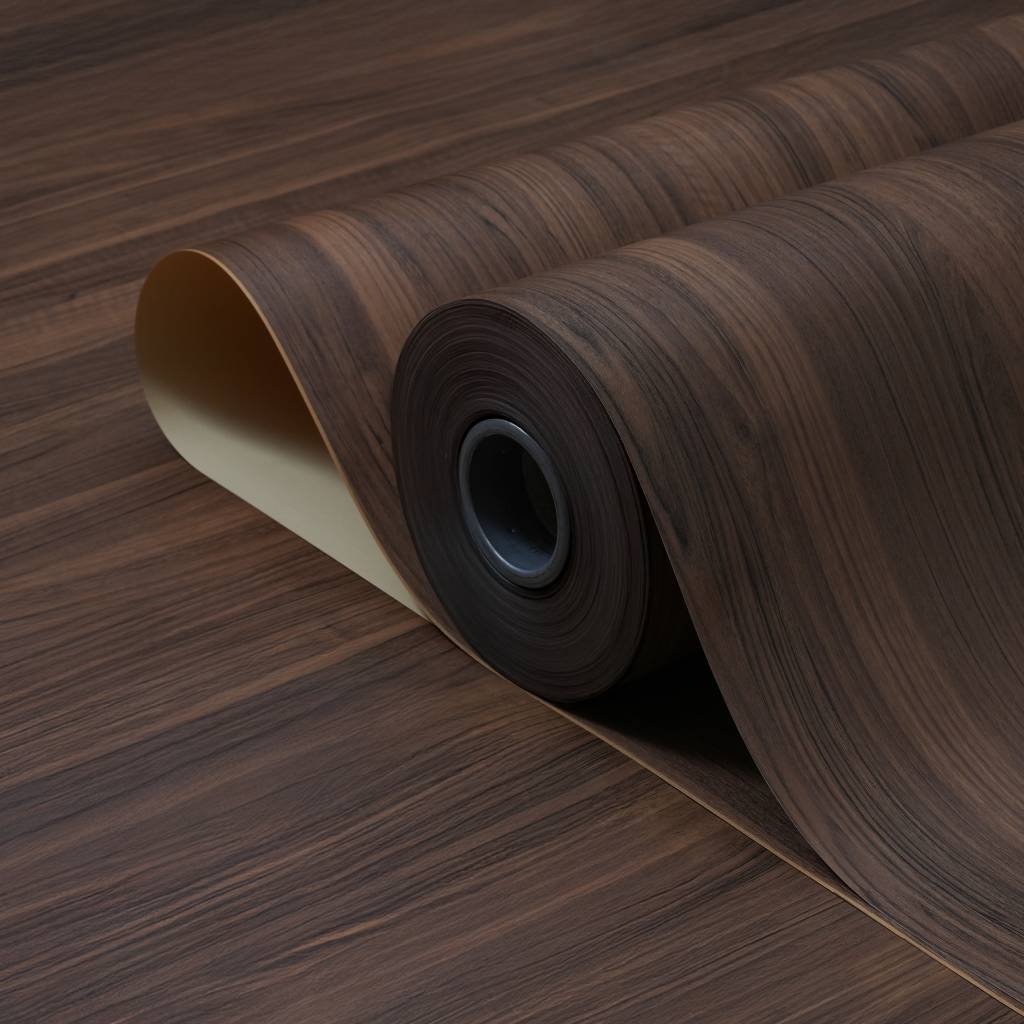
For flat lacquered doors, the HDF skin is bonded directly: the timber frame is run through a glue-spreader roller that coats both sides simultaneously, and a face skin is laid onto each surface. When a carved surface model is requested, the HDF face is first CNC-routed to the chosen design, then sent through the same gluing sequence. Lacquered and natural veneer leaves are held in a cold press for 35 minutes at 55–60 bar. Because Melamine (4/6 mm) and American Panel (3.2 mm) faces are thinner, they are bonded in a hot press at 100–110 °C for 5 minutes; PVC doors are processed on a vacuum membrane line (detailed in Stage 5).
Engineered to the target leaf thickness. Door leaves are produced in 40, 42, 47, 50, 52 and 55 mm thicknesses. The final thickness is not achieved by the face alone — it is the sum of the face applied to each side and the stile beneath it. Because of this, the stile thickness is dimensioned to the face being used: a 4 mm, 6 mm or 8 mm face each calls for a different stile thickness to land precisely on the specified leaf dimension. This is why surface selection and frame preparation are planned together from the start.
4. Sizing, Edge-Banding and Machining
Once pressing is complete, each leaf is trimmed to its final dimensions on a sizing machine; all four edges are squared and cleaned, ready for edge-banding.
On the edge-banding line, banding is bonded to all four edges. Lacquered and American Panel doors use paintable ABS banding (later painted together with the leaf); Melamine and PVC doors use banding colour-matched to the surface; Natural Veneer doors are banded with the same wood veneer. The banded leaf then moves to CNC machining, where it is bored for the specified lock and handle set and the hinge recesses are routed to match the selected hinge type.
Every leaf that clears machining passes through a dedicated quality-control checkpoint before finishing — a deliberate inspection gate that catches any dimensional, banding or boring defect while it is still correctable, rather than after a finish coat has been applied.
5. Finishing by Door Type
Up to surface application, every door shares the same backbone. From the face onward, each finish follows its own path.
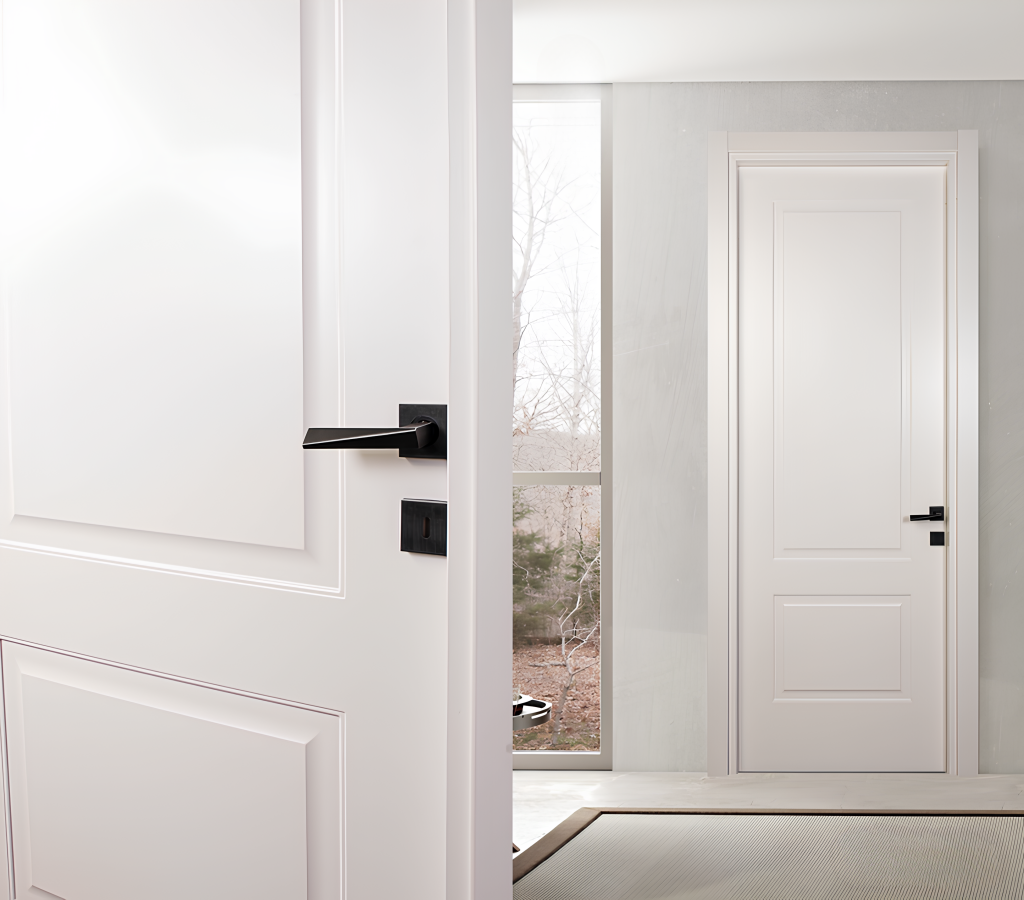
Lacquered. The most finish-intensive line. After the cold press, the leaf enters a multi-coat lacquer process: a prime → dry → sand cycle is repeated, then a topcoat is applied in the RAL colour specified on the order. Application is fully automated and hands-free — robotic spray guns coat the entire surface with uniform volume and consistent pressure. The paintable ABS edge banding, bonded earlier during the banding stage, is painted together with the leaf, so the edge takes exactly the same colour as the face with no visible transition.
American Panel. The panel faces arrive ready-made at 3.2 mm and are hot-pressed onto the frame. Frame build, gluing, sizing and banding follow the same route as lacquered doors. The difference is in the finish: because the panel arrives pre-textured and pre-primed, the priming and sanding stages are skipped — a single RAL topcoat completes the door, shortening the finishing cycle without affecting appearance.
Melamine. Faces arrive ready-made in 4 mm or 6 mm and are hot-pressed onto the frame. Frame, gluing, sizing and banding are identical; the only change is at the edge, where the ABS band is colour-matched to the melamine surface. Melamine is a finished decorative surface, so these doors require no painting — they are complete once banded.
PVC-Coated. This line diverges earliest. Both flat and CNC-routed faces enter a vacuum membrane line, where the PVC film selected for the order (by product code) is vacuum-formed over the entire surface, including any routed contours, and then pressed. As with melamine, the edge band is colour-matched to the PVC finish, and there is no painting stage.
Natural Veneer. The veneer is supplied ready to order in the requested species — walnut, oak, ebony and others. It is first bonded to a flat HDF face; the veneered face is then glued to the frame and cold-pressed. Edges are banded with the same wood veneer, so the grain runs continuously around the door. In finishing, these doors receive a grain filler followed by a clear lacquer, kept transparent to preserve the natural character and figure of the wood. Where a project calls for it, tinted tones can take the door darker or lighter while keeping the grain visible.
6. Door Frame Production
A complete door is more than its leaf — the frame and architrave carry it, seal it and define how it sits in the wall. The frame is engineered with the same discipline as the leaf.
Materials and build-up. Interior door frames are produced in one of three constructions: full MDF, an MDF–timber–MDF sandwich, or WPC. The two most common frame thicknesses are 36 mm and 42 mm, both achieved by pressing layers together:
- 36 mm — three 12 mm MDF layers bonded into a single block
- 42 mm — 12 mm outer layers with an 18 mm core layer
- Timber-cored frames — a 12 mm or 18 mm natural-wood core between MDF faces
In every construction the visible surface is kept as MDF, because an MDF face gives a more stable, predictable result for coating, CNC work and painting. WPC frames are specified mainly for humid environments, where their moisture resistance is an advantage. Unlike the MDF-based frames, the WPC profile arrives ready-formed — in-house work is limited to surface wrapping, with no cutting, pressing, profiling or CNC step.
Production sequence (for MDF and timber-cored frames; WPC frames bypass it and enter only at the wrapping stage): manufacture begins by cutting the MDF sheets to the required frame width — 10 cm to 28 cm depending on wall thickness — then pressing the layers together. After pressing, the frames pass through profiling machines that cut the leaf rebate, the architrave channel and the seal (gasket) channel in a single dressed profile.
The frames then move to the wrapping line, where the surface is finished to match the door:
- PVC frames — wrapped with PVC coating, then CNC-machined for the hinge and lock recesses
- Melamine frames — the same route as PVC frames, but wrapped with an impregnated finish foil
- Lacquered frames — wrapped with a paintable PP coating, then CNC-machined and sent to the paint facility
- American Panel frames — likewise PP-wrapped; every frame destined for the paint line receives this PP coating
- Natural veneer frames — wrapped with natural wood veneer, then clear-lacquered in the paint shop
After CNC machining, PVC and melamine frames go directly to packaging, while lacquered, American Panel and veneer frames pass to the paint facility to be finished alongside their leaves.
A note on adhesion. The quality of the bonding adhesive used in wrapping is decisive. Eurasia Door uses polyurethane (PU) adhesive, which lets the surface material withstand very high temperature and humidity without lifting or delaminating. The same PU bond is applied to the leaf edge banding and to the architrave wrapping — a single, consistent standard across every wrapped surface of the door set.
Frame finishing. Because they are PP-wrapped, lacquered and panel frames skip the repeated sanding cycle the leaf face requires:
- Natural veneer frames — sanded, grain-filled and clear-lacquered
- Lacquered and American Panel frames — primed and painted directly, with no sanding stage, since the PP wrap already provides a stable, paint-ready surface
7. Architrave Production
Architraves — the trim that frames the doorway and conceals the joint between frame and wall — are produced in an L-shaped profile from MDF and HDF. The main body is 8, 12, 16 or 18 mm MDF, and the collar (the returning lip) is 4 mm HDF.
MDF and HDF sheets are cut to size on the sizing line, then joined on the architrave machine, where the main body and collar are bonded into the final L-profile. Main-body widths are produced from 8 cm to 12 cm to order. The 4 mm HDF collar is typically 3.5 cm deep — this returning lip absorbs variation in wall thickness, concealing minor wall imperfections at the reveal.
WPC architraves arrive ready-formed, like WPC frames. They share the L-shape but measure 3.5 mm in both body and collar, with an 8.5 cm main width and a 4 cm collar. In wrapping, architraves follow the same path as the frames — finished by door type (PVC, impregnated foil, PP for painting, or natural veneer) and bonded with the same PU adhesive — so leaf, frame and architrave present as one matched set.
What makes a complete door set. For ordering and quantity take-off, a standard set comprises:
- 1 door leaf
- 2.5 lengths of door frame
- 5 lengths of architrave
- Final Inspection, Packaging and Export
After finishing, every component passes a final quality check before packaging. The packaging method varies by door type.
Leaves:
- Lacquered and Natural Veneer — wrapped individually in padded protective material, boxed in cartons, with rigid cardboard corner protectors fitted to the corners
- PVC and Melamine — shrink-wrapped, then placed in cartons
- American Panel — standard packaging; no carton
Frames are packaged as a complete set per doorway: lacquered, PVC, melamine and veneer frames in padded wrap plus carton; American Panel frames are nylon-wrapped and palletised without cartons.
Across all types, finished goods are palletised according to the shipping method — truck, lorry or container — and stacked in standardised loads of 10, 20 or 40 units. A single truck or container holds, on average, 380–420 complete door sets, depending on door dimensions and the core material specified — load planning that helps buyers size full-container orders accurately. This export-ready packaging is engineered for long-haul freight to Europe, the Middle East and North America, so doors arrive in the same condition they left the Tosya facility. Planning a project or a full-container order? Contact our export team to discuss specifications, finishes and lead times.
Frequently Asked Questions
What is a complete interior door set?
A standard door set comprises one door leaf, 2.5 lengths of door frame and 5 lengths of architrave. This composition is used for ordering and project quantity take-off.
Are Eurasia Door leaves made of WPC?
No. The door leaf is built from a solid timber frame (stiles and rails) with an engineered core — paper honeycomb, timber lattice, tubular core or EPS foam — and an HDF face skin. WPC is used only for door frames and architraves, mainly in humid environments.
What moisture content is the timber dried to?
The timber stiles and rails are kiln-dried to a stable 8–12% moisture content, the benchmark range for dimensional stability in interior joinery.
What are interior door frames made from?
Frames are produced in one of three constructions: full MDF, an MDF–timber–MDF sandwich, or WPC. The two most common thicknesses are 36 mm and 42 mm; WPC frames are specified mainly for humid environments.
How many doors fit in a shipping container?
A single truck or container holds, on average, 380–420 complete door sets, depending on door dimensions and the core material specified.