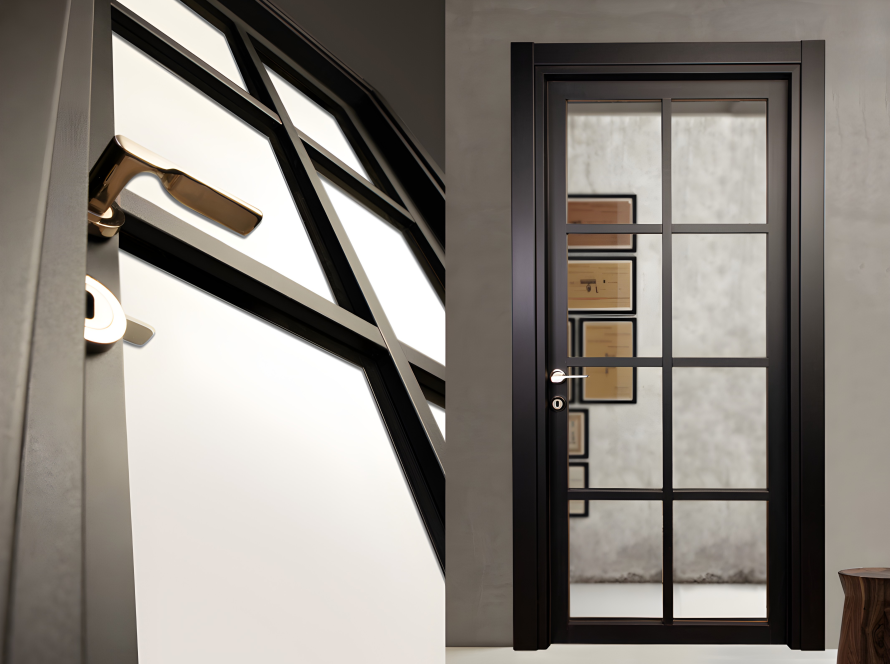
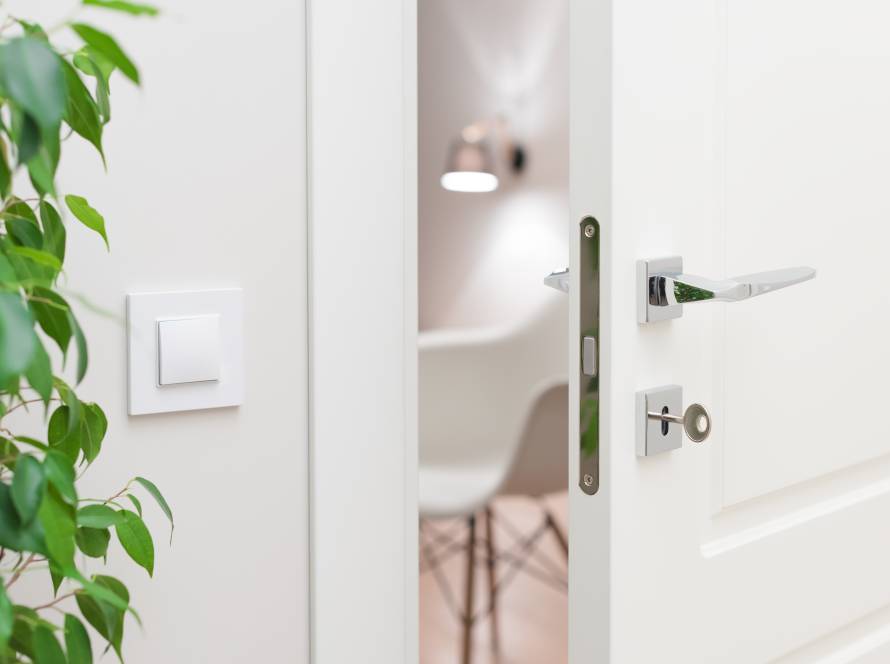
PVC coated interior doors have become the preferred solution for commercial and residential projects that demand durability, moisture resistance, and low maintenance without sacrificing design aesthetics. This guide covers the engineering behind PVC door systems, their advantages over alternative finishes, and why they dominate high-volume construction projects across Europe, the Balkans, and the Middle East.
What Are PVC Coated Interior Doors?
A PVC coated interior door consists of an engineered wood core — honeycomb, solid wood frame, or particleboard depending on project requirements — finished with HDF face panels and wrapped with a premium PVC (polyvinyl chloride) foil using advanced vacuum-press technology.
Unlike surface-applied paint or laminate, the vacuum-press process creates a continuous, edge-to-edge bond that eliminates peeling, bubbling, and delamination — even in high-humidity environments.
Key Benefits of PVC Coated Door Systems
Superior Moisture and Humidity Resistance
The vacuum-pressed PVC foil forms a fully sealed, non-porous surface that protects the door against moisture and humidity far better than lacquered or painted finishes. Combined with sealed edge-banding, this makes PVC-coated doors a reliable choice for high-humidity environments — from Balkan coastal developments to Gulf-state hotel projects. The surface will not swell, peel, or deteriorate with repeated exposure to humidity, and resists the warping common to untreated or painted doors over time.
Superior Scratch and Impact Resistance
PVC foil is engineered to resist scratches, scuffs, and daily wear. This durability makes it the go-to finish for high-traffic commercial environments — apartment corridors, hotel service areas, student housing, healthcare facilities, and office buildings where doors are subjected to constant use.
Minimal Maintenance
PVC coated doors require no repainting, refinishing, or special treatment throughout their lifespan. A simple wipe-down with standard cleaning products keeps the surface looking new. For property managers and facility operators, this translates directly to reduced lifecycle costs.
Design Versatility
Modern PVC foil technology offers an extensive range of finishes — from realistic wood-grain textures (oak, walnut, teak) to solid RAL colors and contemporary matte surfaces. High-definition printing now enables PVC films to replicate the look and feel of natural wood veneer at a fraction of the cost, giving architects and designers significant creative flexibility.
Sustainable Manufacturing
Leading PVC door manufacturers now operate with 100% renewable energy. At Eurasia Door, our entire production facility is powered by on-site solar energy (PV) systems, supporting the sustainability goals of environmentally responsible construction projects worldwide.
Technical Specifications
Understanding the engineering behind PVC coated doors helps architects and procurement managers specify the right product for their projects:
- Core Material: Honeycomb, solid wood frame, or particleboard
(project-dependent) with HDF face panels - Surface Finish: 0.25mm+ moisture-resistant PVC lamination applied via vacuum-press technology
- Moisture Resistance: Fully sealed, highly moisture- and humidity-resistant surface
- Impact Resistance: Engineered for high-traffic commercial and institutional environments
- Fire Rating: EI30 fire-rated core options available for hospitality and commercial applications
- Production Capacity: Up to 12,000 full interior door sets per month
PVC Coated Doors vs Other Interior Door Finishes
PVC vs Lacquered Doors
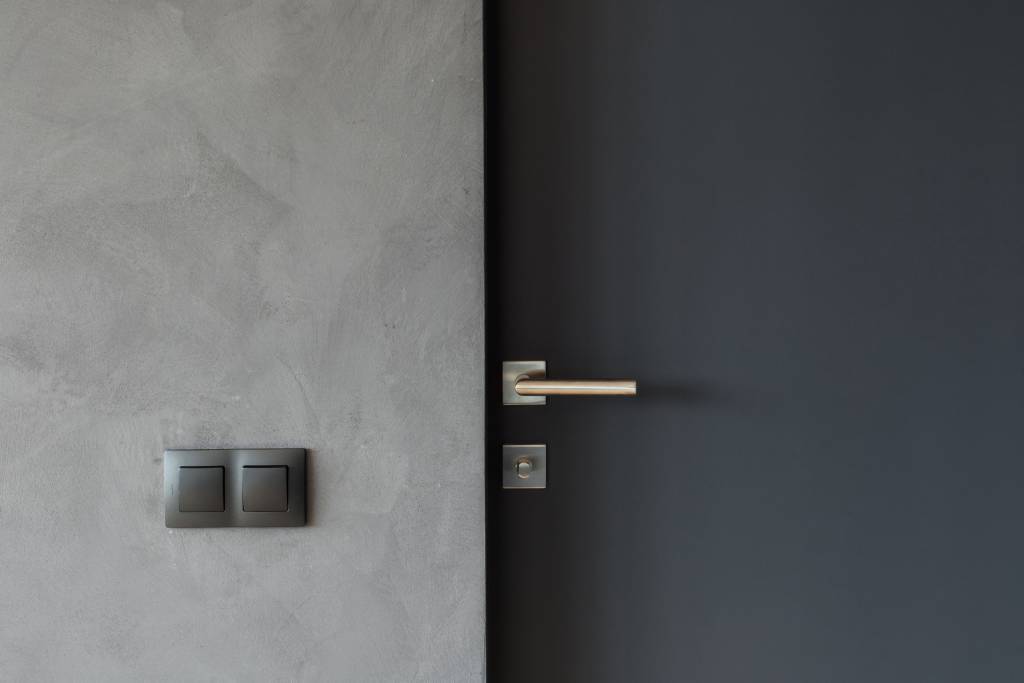
Lacquered interior doors offer a flawless, high-end painted finish that defines the “silent luxury” aesthetic. However, lacquer is more vulnerable to scratches and moisture than PVC. For projects where durability and budget efficiency take priority over premium aesthetics, PVC is the smarter choice. For luxury hotel guestrooms and high-end residential interiors, lacquer remains the premium option.
PVC vs Melamine Faced MDF Doors
Melamine faced MDF doors share many of PVC’s practical advantages — scratch resistance, color consistency, and cost efficiency. The key difference is moisture performance: PVC’s sealed, wrapped surface provides significantly better protection against humidity and water exposure. For wet-area adjacent doors and coastal projects, PVC is the preferred specification.
PVC vs Natural Veneer Doors
Natural veneer doors offer authentic wood grain and texture but require more maintenance, are sensitive to humidity, and carry a higher price point. PVC doors with modern wood-grain films replicate the veneer aesthetic at a lower cost with better durability — making them the pragmatic choice for large-scale projects where hundreds of identical doors are needed.
Project Applications
Hotels and Hospitality
PVC coated doors are widely specified for hotel service corridors, back-of-house areas, and mid-range guestroom applications where moisture resistance and durability are critical. Combined with EI30 fire-rated cores, they meet both safety and performance requirements for international hospitality standards.
Large-Scale Residential Developments
Apartment complexes and housing developments across Romania, Serbia, Bulgaria, Greece, and broader Europe rely on PVC doors for their consistency, durability, and cost efficiency at scale. Property developers benefit from uniform quality across thousands of units with minimal post-installation maintenance requirements.
Healthcare and Education
Hospitals, clinics, schools, and universities require doors that withstand heavy daily use while maintaining hygiene standards. PVC’s smooth, non-porous surface is easy to clean and resistant to chemical cleaning agents — making it ideal for institutional environments.
Commercial and Office Interiors
Modern office fitouts, co-working spaces, and retail environments benefit from PVC doors’ clean aesthetics and practical performance. The wide range of available finishes — from minimalist solid colors to warm wood-grain textures — allows designers to match any interior concept.
Why Source PVC Doors from Turkey?
Turkey is one of the world’s leading manufacturers of PVC coated interior doors, offering a combination of industrial capacity, technical expertise, and competitive pricing that few markets can match:
- Industrial Scale: Major Turkish factories produce up to 12,000 door sets per month, enabling them to serve large international projects with consistent quality and on-time delivery.
- Advanced Technology: Turkish manufacturers invest heavily in vacuum-press equipment, CNC profiling, and automated production lines — ensuring precision and consistency across high-volume orders.
- Strategic Logistics: Turkey’s geographic position enables efficient shipping to Europe (3-5 days to the Balkans), the Middle East, and North America via established trade routes.
- Cost Advantage: Compared to Western European manufacturers, Turkish PVC door producers offer significant cost savings — typically 30-50% — while maintaining equivalent technical specifications.
- Sustainability: Leading facilities now operate entirely on solar energy, aligning with global green-building requirements.
How to Specify PVC Coated Doors for Your Project
When preparing a door schedule or procurement brief for PVC coated interior doors, include the following specifications:
- PVC film type: Wood-grain, solid color, or custom design
- PVC thickness: Minimum 0.25mm for commercial applications
- Core type: Honeycomb, solid wood frame, or particleboard
(EI30 fire-rated solid core available) - Door dimensions: Width, height, thickness
- Frame and architrave: Matching PVC-wrapped frame set or separate specification
- Hardware preparation: Hinge recesses, lock mortises, closer reinforcement
- Quantity and delivery schedule: Critical for large-scale projects requiring phased delivery
Conclusion
PVC coated interior doors deliver the optimal balance of durability, moisture resistance, design flexibility, and cost efficiency — making them the default specification for high-volume commercial, residential, and institutional projects worldwide. From apartment complexes in the Balkans to hotel developments in the Middle East, PVC doors provide consistent, maintenance-free performance at industrial scale.
For architects, developers, and procurement managers seeking a reliable manufacturing partner for PVC coated door systems, Eurasia Door offers factory-direct supply from Turkey with a production capacity of 12,000 sets per month, extensive PVC finish options, and EI30 fire-rated configurations. Contact us for technical specifications and project pricing.